
Like
Share
멍실장
망간 효과와 관절·연골 건강

5 Key Points on Manganese’s Joint and Cartilage Health Benefits and Feeding Tips Selected by Veterinarians

JointIngredientsMeongsiljang Veterinary Advisory Board

Manganese is an essential trace mineral for cartilage synthesis and joint health in dogs and cats. Here’s a detailed guide on recommended amounts, precautions, and key feeding methods.

What Is Manganese?

Manganese plays an important role in joint health for dogs and cats.
Manganese is an essential trace mineral that plays a vital role in the metabolism of connective tissues, including bones and cartilage, in both dogs and cats. It is a key nutrient that should not be overlooked when supporting joint health. Although it is present in the body in very small amounts, studies in other mammals have shown that a deficiency can lead to problems with cartilage formation and bone development. While there are currently no clinical or experimental reports of manganese deficiency in dogs and cats, maintaining a balanced and appropriate intake is important. On the other hand, since there is still insufficient data to predict the safe upper limit (SUL) of manganese in dogs, and information is also limited for cats, it is safest to avoid excessive intake—such as from overlapping multiple supplements—and to maintain appropriate levels.

The Role of Manganese in Pets’ Bodies

Manganese does more than just strengthen bones. It serves as a component of various metalloenzymes and acts as a cofactor to activate multiple enzymes, playing a key role in the metabolism of cartilage, bone, and connective tissues.
Enzyme Cofactor: Activates various enzymes, including hydrolases, decarboxylases, kinases, and transferases.
Supports Bone and Cartilage Metabolism: Functions as a component of metalloenzymes such as arginase, contributing to the metabolic processes that build bone and cartilage.
Antioxidant Activity: Acts as a component of antioxidant enzymes, such as manganese superoxide dismutase (SOD), which protect cells.
Energy Metabolism: Participates in enzymes like pyruvate carboxylase, aiding in carbohydrate metabolism.

Problems Arising from Manganese Deficiency
According to veterinary textbooks, there are currently no clinical or experimental reports of manganese deficiency in dogs and cats. However, based on research in other mammals such as sheep, goats, and cattle, we can estimate the potential issues that may arise from prolonged deficiency.
Growth retardation: Studies in other mammals have reported reduced bone growth in young animals, along with shortened or bowed forelimbs.
Impaired cartilage formation: Research in other species suggests that inhibited endochondral ossification within cartilage may lead to reduced joint function.
Reduced motor function in adults: In adult animals of other species, deficiency has been associated with lameness, joint enlargement, decreased motor function, and ataxia (loss of coordination).
Skeletal deformities: Severe deficiency has been shown in other species to lead to structural abnormalities of bones and joints, such as joint curvature in newborn lambs, kids, and calves.
Since no clinical cases of deficiency have been reported in dogs and cats, it is important to maintain adequate intake through a complete and balanced diet.
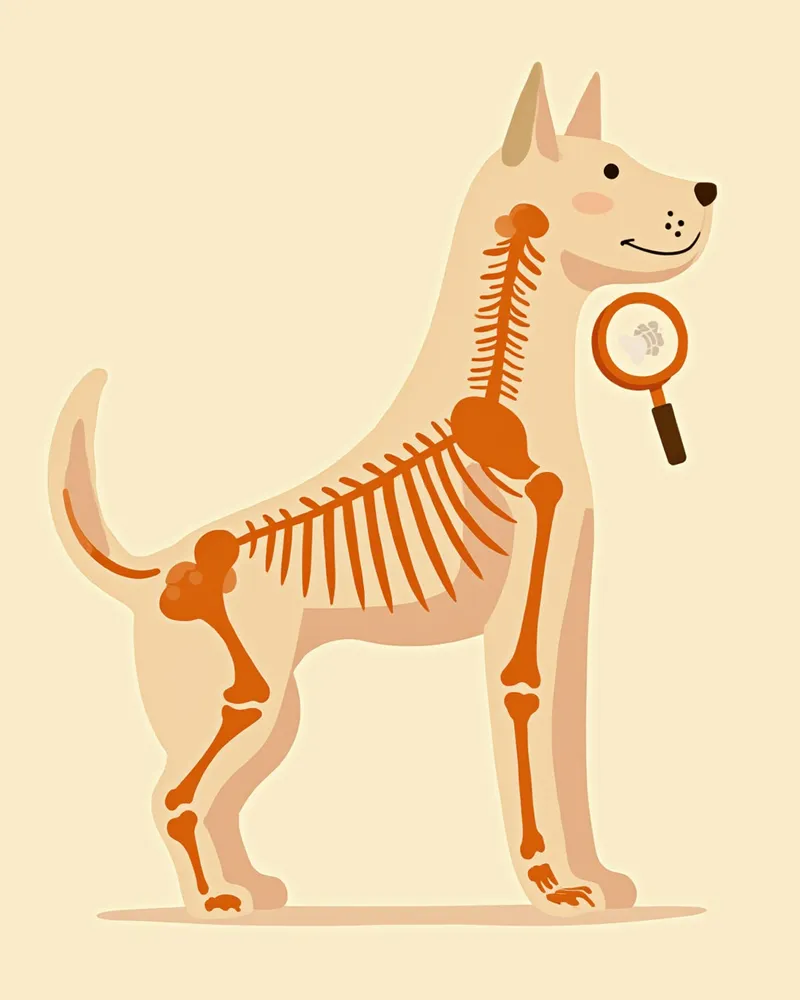
A veterinary illustration showing joint cartilage and bone structure

Most Pets Are Fine on Commercial Diets Alone

Commercial complete and balanced diets (those meeting AAFCO standards) already contain adequate levels of manganese, so additional supplementation is generally unnecessary. However, if you primarily feed a homemade or raw diet, or if your dog is senior or has joint disease, please consult your veterinarian to determine whether supplementation is appropriate.

Key Manganese Information at a Glance

Safe

망간(Manganese)

연골·뼈 형성, 항산화, 에너지 대사

Dosage: 강아지 1.25mg/1000kcal · 고양이 1.2mg/1000kcal (미국국립연구위원회 권장 최소량)

미국국립연구위원회(NRC) 2006 권장

Caution

망간(과잉 시)

-

Dosage: 고용량 장기 섭취 주의

간·신경계 독성 가능성

Recommended Feeding Amounts and Food Sources

Manganese is often naturally present in everyday diets. If you’re feeding a complete and balanced diet that meets AAFCO (Association of American Feed Control Officials) standards, no additional supplementation is needed.
Natural sources: Manganese is abundant in whole grains, leafy green vegetables, nuts, seaweed, and organ meats like liver and kidney.
Commercial pet food: If it meets AAFCO guidelines, it already contains an appropriate amount of manganese.
Supplement form: Some joint supplements include small amounts of manganese alongside glucosamine and chondroitin.
Weight-based differences: Larger dogs or those in their growth phase typically require more manganese.

How Manganese Is Used in Joint Supplements

Manganese is more commonly used in combination with glucosamine and chondroitin sulfate than as a standalone supplement. As a mineral that acts as a cofactor for enzymes involved in producing cartilage components, it is often included in small amounts in joint supplements alongside zinc and copper.
Synergistic effect: While glucosamine and chondroitin have been reported to help alleviate certain symptoms, there is no confirmed evidence that they alter the actual structure of joint cartilage.
Joint care for senior dogs: It is best to consult with your veterinarian to determine whether supplementation is appropriate during periods when joint stress increases.
Post-surgical recovery: Under veterinary guidance, it may be used to support cartilage recovery following joint surgery.
Dogs and cats playing healthily with joint supplements

Be Cautious of Excessive Intake

Manganese is an essential mineral, but there is currently insufficient data to establish a safe upper limit (SUL) for dogs, and information for cats is also limited. Therefore, it is safest to avoid excessive intake, such as administering multiple supplements that overlap in ingredients or excessively adding manganese-rich ingredients to homemade diets. Since imbalances in mineral levels have been linked to bone and joint issues in other mammals, it is better to rely on a complete and balanced diet as the foundation rather than supplementing with high doses of manganese alone. If you are currently giving your pet multiple overlapping supplements, please consult your veterinarian before deciding whether to continue or adjust supplementation.

When Your Pet Needs Manganese Supplementation

Not every pet needs manganese supplementation. It’s only necessary in certain situations.
Homemade or raw food diets: These may lack nutritional balance, so a veterinarian-prescribed supplement is often needed.
Pets with joint conditions: Manganese is sometimes included in joint support supplements for issues like patellar luxation, hip dysplasia, or cruciate ligament problems.
Senior pets: As cartilage regeneration slows with age, manganese can be part of a comprehensive joint care plan.
Large breed puppies: During rapid skeletal growth, balanced mineral intake is essential.

Reviewed by a veterinarian

Dr. Tony — Punnawat Phongkittirak

Dr. Tony — Punnawat Phongkittirak

Veterinarian

A veterinarian who majored in veterinary medicine at Khon Kaen University, Thailand, and completed the IVSA program at North Carolina State University in the United States. Drawing on clinical experience at animal hospitals, he works in the pet healthcare field and is dedicated to building a digital care environment that connects pet parents with veterinarians.

Frequently Asked Questions

Will supplementing with manganese alone have any effect on joint health?
It’s more common to use a comprehensive joint supplement that includes glucosamine and chondroitin rather than manganese alone. Manganese acts as a cofactor when these components help build cartilage.
Is manganese sufficient if my pet only eats regular commercial food?
Most complete and balanced diets that meet AAFCO standards are sufficient on their own. However, if your pet is primarily on a homemade or raw food diet, it’s best to consult with your veterinarian before considering any supplements.
Do dogs and cats have different manganese requirements?
The nutritional requirements per 1,000 kcal are similar for both species. However, individual needs may vary depending on body weight, life stage (such as growth, pregnancy, lactation, or senior years), and diet composition. Therefore, it is best to consult with your veterinarian to determine the appropriate supplementation for your pet.
Are there any guidelines for choosing a supplement that contains manganese?
Choose a comprehensive joint supplement that contains small amounts of manganese alongside glucosamine, chondroitin, and MSM. We do not recommend high-dose manganese-only products due to the risk of excessive intake.
How can you tell if your pet is showing signs of manganese excess?
There is currently insufficient data to establish a safe upper limit for manganese in dogs, and information for cats is also limited, making it difficult to definitively determine whether excess intake has occurred. However, the risk of excessive manganese intake can arise from administering multiple supplements simultaneously or providing high doses of manganese separately. In such cases, it is safest to consult with a veterinarian to adjust supplementation accordingly.

Share

Related Guides

References

[1] Hand, M.S. et al., Small Animal Clinical Nutrition, 5th Ed, 2010

[2] National Research Council, Nutrient Requirements of Dogs and Cats, 2006

[3] Case, L.P. et al., Canine and Feline Nutrition, 3rd Ed, 2011

This information is based on veterinary literature and does not replace diagnosis or treatment. Please consult a veterinarian for specific health concerns.

Metapet Co., Ltd. | CEO: Park Sung-yong | Business Reg. No. 417-88-02562 | Seoul, South Korea | Customer Center

Manganese for Joint & Cartilage Health: 5 Vet Tips | Meongsiljang