
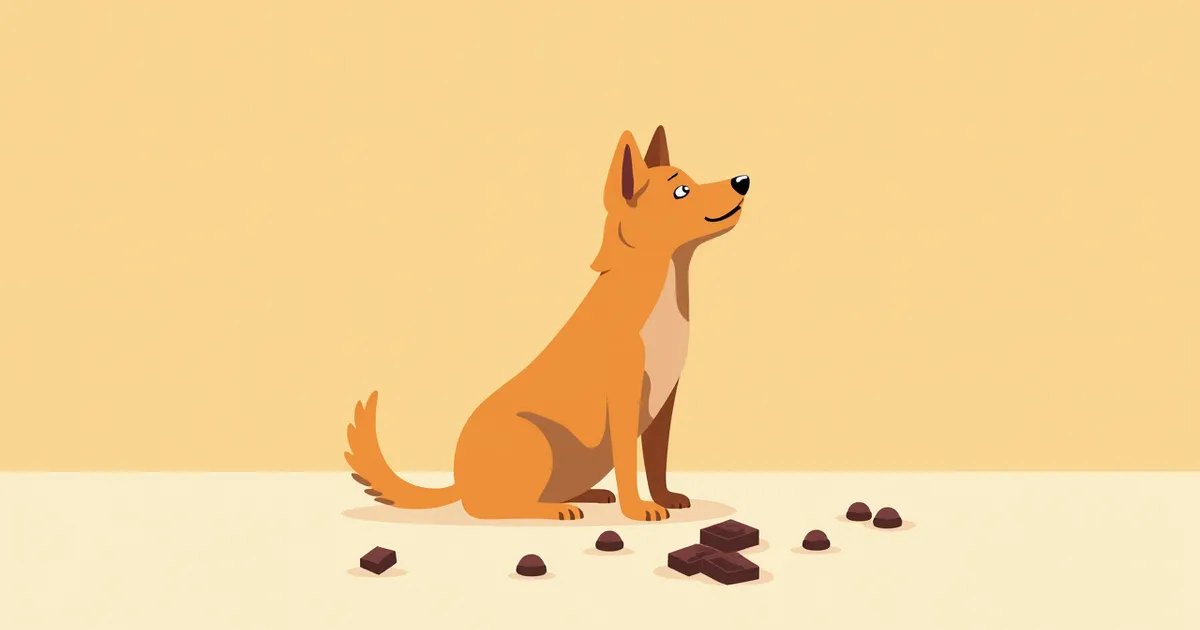
If Your Dog Licked Cocoa Mulch — Symptoms, Emergency Response, and Prevention
Based on veterinary textbooks, we’ve compiled a guide covering the symptoms and emergency response measures when dogs consume chocolate or cocoa products, as well as the dangerous ingestion amounts by type and prevention methods.
What Is Chocolate and Cocoa Poisoning in Dogs?

Why Is Chocolate Toxic to Dogs?
Theobromine Content by Chocolate Type and Dangerous Ingestion Amounts (Based on 5 kg Body Weight)
| Item | Theobromine Content | Caution Intake for 5kg | Risk Level |
|---|---|---|---|
| Cocoa powder | Very high (highest level of cacao solids) | Dangerous even under 5g | 🔴 Most dangerous |
| Cacao shell mulch | Very high | Dangerous even in tiny amounts | 🔴 Very dangerous |
| Dark chocolate (cacao 35–75%+) | High | Symptoms possible from about 10g (2g/kg) | 🔴 Dangerous |
| Milk chocolate (cacao about 20–26%) | Medium | Mild symptoms from about 50g (10g/kg) or more | 🟡 Caution |
| White chocolate | Almost none | Almost no theobromine toxicity | 🟢 Relatively safe |
Based on textbooks, dark chocolate can cause symptoms starting at about 2g/kg (or 15–20mg/kg of theobromine), and milk chocolate starting at about 10g/kg. White chocolate contains almost no theobromine. Since it varies greatly depending on body weight and individual sensitivity, consult a veterinarian for the exact dangerous amount.
Checklist of Main Symptoms of Chocolate Poisoning
Go to the Emergency Room Immediately If You See These Symptoms
If your dog experiences seizures, severe muscle spasms, decreased consciousness, or an irregular or very rapid heartbeat, take them to a 24-hour emergency animal hospital immediately. Chocolate poisoning can worsen rapidly within hours. During transport, keep your dog lying down and calm, and minimize any additional stimulation.
Emergency Response Measures Immediately After Chocolate Ingestion
Treatment at the Veterinary Hospital
Post-Discharge Home Care and Prevention of Recurrence

Exercise Extra Caution with Small Breeds, Pregnant Dogs, and Senior Dogs
Smaller dogs are far more susceptible to severe toxicity from the same amount of chocolate because toxicity is determined by the dose per kilogram of body weight (mg/kg). Mild symptoms from milk chocolate have been reported at doses as low as approximately 10 g/kg, meaning a small dog weighing 2 kg could start showing symptoms after ingesting around 20 g. Dark chocolate and cocoa powder are even more dangerous, posing risks at much smaller quantities. It is also important to monitor puppies that are pregnant, elderly, or have heart or kidney disease with extra care. Even if no clear symptoms appear, it is safest to contact your veterinarian as a precaution if you have any suspicion of ingestion.
Reviewed by a veterinarian

Dr. Tony — Punnawat Phongkittirak
VeterinarianA veterinarian who majored in veterinary medicine at Khon Kaen University, Thailand, and completed the IVSA program at North Carolina State University in the United States. Drawing on clinical experience at animal hospitals, he works in the pet healthcare field and is dedicated to building a digital care environment that connects pet parents with veterinarians.
Reviewed 2026-06-01
Frequently Asked Questions
My dog ate a piece of chocolate. Is it okay?
Is it safe to induce vomiting at home using salt water?
Is it safe for my pet to eat white chocolate?
Why is cocoa powder particularly dangerous?
If there are no symptoms after ingestion, do I still need to visit the vet?
Share
Related Guides

Top 5 Emergency Poisoning Kits for Dogs Recommended by Veterinarians
7 Emergency Checklist Items for Cat Poisoning — Signs to Check Immediately After Exposure

Complete Guide to Giardia Infection in Dogs: Symptoms, Transmission Routes, Treatment, and Prevention

Acute Kidney Injury in Cats: Symptoms, Causes, and When to Go to the Vet You Must Not Miss

Complete Guide to Canine Sarcoptic Mange: Symptoms, Transmission Routes, Treatment, and Prevention
My Cat Keeps Vomiting and Won’t Eat — Symptoms, Causes, and Emergency Response for Intestinal Intussusception
Complete Guide to Increasing Your Cat’s Water Intake: Symptoms, Causes, Diagnosis, Treatment, and Management

Cat Anal Gland Care: Symptoms, Causes, Diagnosis, Treatment, and Management Tips

Feline Heartworm Disease: Symptoms, Causes, Diagnosis, Treatment, and Management Essentials

Puppy Drinking Excessive Water and Losing Weight — Causes and Treatment Timing for Chronic Kidney Disease (CKD)
References
[1] Blackwell's Five-Minute Veterinary Consult Clinical Companion: Small Animal Toxicology, 3rd Edition. Wiley-Blackwell.
[2] Schaer M, Gaschen FP. Clinical Medicine of the Dog and Cat, 4th Ed. CRC Press, 2022.
[3] Plumb DC. Plumb's Veterinary Drug Handbook, 10th Ed. Wiley-Blackwell, 2023.