Like
Share
멍실장
강아지 정형외과 침대(메모리폼) 추천 TOP 5 — 관절 부담 감소

Top 5 Orthopedic Dog Beds Recommended by Veterinarians — Comparing Memory Foam for Joint Strain

JointTop PicksMeongsiljang Veterinary Advisory Board

Orthopedic dog beds use memory foam to distribute pressure and reduce joint strain. We’ve reviewed the top five options based on three key factors: memory foam thickness, density, and waterproof covers.

What Are Orthopedic Dog Beds? Which Dogs Need Them?

A side view of an elderly dog resting comfortably on a memory foam orthopedic bed.
Orthopedic dog beds are functional sleeping surfaces made from memory foam or high-density foam that distribute body pressure to reduce strain on joints and bones. The key isn’t just softness, but the ability to support your dog’s weight while evenly dispersing pressure. Dogs with arthritis, hip dysplasia, those recovering from patellar luxation surgery, or senior dogs may experience increased pain or discomfort when getting up from regular cushions. In fact, studies have shown that memory foam pads can reduce pressure on bony prominences during prolonged rest, lowering the risk of pressure ulcers (bedsores). However, please remember that managing arthritis itself requires more than just bedding—maintaining an appropriate weight and incorporating low-impact exercises like swimming are essential components of care.

Why an Orthopedic Bed Instead of a Standard Cushion?

Dogs spend 12 to 16 hours a day lying down. The longer they remain in one position, the more pressure accumulates on specific areas of their body. Standard cotton pads tend to sag in the middle over time, causing the spine to settle into a curved posture. Memory foam, however, responds to body heat and pressure, conforming to the dog’s shape to evenly distribute weight across bony prominences such as the shoulders, hips, and elbows. This is especially beneficial during post-surgical recovery, as it helps prevent pressure sores (decubitus ulcers) that can develop from prolonged immobility.

5 Key Criteria for a Good Orthopedic Bed
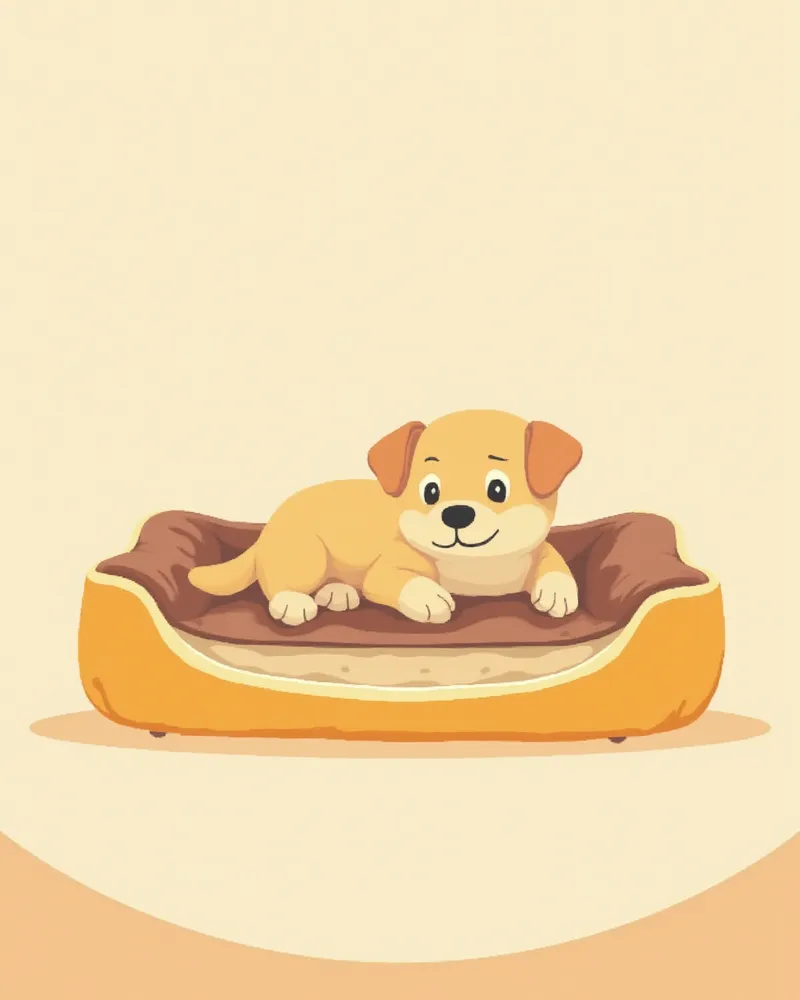
Memory foam thickness: At least 7 cm; for large-breed dogs, 10 cm or more is recommended.
Foam density: 45 kg/m³ or higher to support your dog’s weight without sagging.
Waterproof cover: A waterproof barrier is essential to protect the foam from drool and accidents.
Washability: Make sure the cover is removable and machine-washable.
Non-slip bottom: If the bed slides when your dog stands up, it can jar their joints.
If two or more of these five features are missing, it’s hard to consider the bed an orthopedic one, no matter how expensive it is.
Cross-sectional structure of a memory foam orthopedic bed — foam, waterproof membrane, and cover layer

Top 5 Comparison — Key Specs at a Glance

Item#1 Full-Foam Type#2 Dual-Layer Type#3 Donut Memory Foam#4 Cooling Gel Memory Foam#5 Low-Profile Mat
Memory Foam Thickness10cm8cm + 3cm latex7cm with reinforced sides8cm + gel layer5cm
Foam Density50kg/m³55kg/m³45kg/m³48kg/m³40kg/m³
Waterproof MembraneTrueTrueTrueTrueFalse
Removable Washable CoverTrueTrueTrueTrueTrue
Non-Slip BottomTrueTrueFalseTrueTrue
Recommended Weight RangeAll weight rangesMedium and large dogsSmall dogsSummer / heat-sensitive petsToy breeds / travel use
Price RangePremiumPremiumMid-rangeUpper-mid rangeBudget

Priorities may differ depending on weight, age, and symptoms. Please check each product's features in the main text.

1st Place — Full-Foam Orthopedic Bed (10 cm Memory Foam)

This is our top recommendation for pets of all sizes. Its single-block memory foam design prevents sagging in the center, even over time. The combination of 10 cm thickness and 50 kg/m³ density means that even a 30 kg large-breed dog won’t feel the bottom (bottoming out). Models with slightly raised sides also serve as a pillow for head support. This bed is especially suitable for pets whose activity levels have decreased due to weight gain after neutering or aging, and it is frequently recommended by orthopedic specialists during recovery from patellar luxation surgery.
10cm thick full-foam memory foam orthopedic pet bed

2nd & 3rd Place — Dual-Layer / Donut Memory Foam

2nd Place: Dual-Layer Design – This bed features a 3 cm layer of soft latex on top and an 8 cm layer of firm memory foam below. The plush surface provides comfort when lying down, while the firm base offers strong support when standing up. It is recommended for large dogs weighing over 30 kg and those in progressive stages of arthritis. 3rd Place: Donut Memory Foam Bed – The rounded, surrounding sides cradle the head and back, making it ideal for small breeds (such as Pomeranians, Maltese, and Poodles) that prefer to curl up while sleeping. However, many models have weak slip resistance on the sides, so be sure to check the flooring material before use.

4th & 5th Place — Cooling Gel / Low-Profile Mattress

4th Place: Cooling Gel Memory Foam – This design adds a gel layer on top of memory foam, absorbing heat when your pet’s body temperature rises. It’s especially suitable for double-coated breeds (such as Siberian Huskies, Jindo dogs, and Golden Retrievers) during the hot Korean summer. However, it may feel too cold in winter, so opt for a reversible model that can be used on both sides. 5th Place: Low-Profile Mat – A thin, mat-style option measuring 5 cm or less in thickness. It’s ideal for temporary rest after car rides or walks, and as an initial adaptation tool for senior dogs. While it doesn’t provide the full orthopedic benefits of the top three options, it still offers significantly better support than a standard cushion.
Comparing Cooling Gel Memory Foam Beds and Low-Profile Mats

4 Things to Check Before Buying

Not all memory foam is created equal. First, avoid products that don’t specify foam density, as low-density foam can lose its support within just six months. Second, items labeled as “memory foam powder fill” are not genuine solid memory foam. Third, if a new product has a strong chemical odor, it may contain residual formaldehyde, so air it out thoroughly before use. Fourth, for large dogs weighing over 30 kg, always choose a mattress at least 10 cm thick. Forcing a dog to use a mattress that’s too thin can actually place greater strain on their joints.

Tips for Using and Caring for an Orthopedic Bed

Start by placing the bed next to your dog’s usual sleeping spot to help them get used to it. It typically takes about 3 to 7 days for dogs to adjust to a new bed. Wash the cover every two weeks, or once a week during shedding season or when there’s a higher risk of mites. Avoid direct sunlight when drying the foam core, as it can cause deformation; instead, air-dry it in a shaded, well-ventilated area. If your dog has been diagnosed with arthritis, place the bed on carpet or a mat rather than a slippery floor to ensure safety when standing up.

Reviewed by a veterinarian

Dr. Tony — Punnawat Phongkittirak

Dr. Tony — Punnawat Phongkittirak

Veterinarian

A veterinarian who majored in veterinary medicine at Khon Kaen University, Thailand, and completed the IVSA program at North Carolina State University in the United States. Drawing on clinical experience at animal hospitals, he works in the pet healthcare field and is dedicated to building a digital care environment that connects pet parents with veterinarians.

Frequently Asked Questions

Do young dogs (1–2 years old) also need an orthopedic bed?
Hip dysplasia is a developmental condition with a strong genetic component, so a specialized bed alone cannot prevent it. However, since it is more common in large and giant breeds like Golden Retrievers and Labrador Retrievers, the most important step for these dogs is to maintain a healthy weight and engage in moderate, joint-friendly exercise from a young age. An orthopedic bed doesn’t prevent the disease but serves as a supportive tool that reduces pressure on the joints while lying down, enhancing comfort. For other breeds, introducing such a bed is sufficient when they begin to limp frequently due to aging or after physical activity.
How long does a memory foam pet bed typically last?
Genuine memory foam with a density of 45 kg/m³ or higher typically lasts 3 to 5 years. It’s time to replace it if an indentation remains for more than 5 seconds after pressing the center, or if the foam begins to crack.
Which model is best for the post-surgery recovery period?
We recommend flat-sided full-foam (ranked #1) or dual-layer (ranked #2) beds. Donut-style beds may cause discomfort if a leg in a cast or protective brace gets caught on the raised side. For detailed post-operative care instructions, please refer to our [Patellar Luxation Surgery Guide](/ko/qa/dog-patellar-luxation-surgery).
Can cats use the same product?
Because weight and body shape vary, we don’t recommend the same product for all pets. Cats tend to prefer a softer, more rounded design that wraps around them gently. Using a dog-specific memory foam may feel too firm for them.
Even when I provide a bed, my pet prefers to sleep on the floor. Why might this be?
In summer, foam can trap body heat and make your pet feel warm. Try switching to a cooling gel model or placing a thin cotton pad on top. If your pet still avoids it, move the bed to their usual sleeping spot.

Share

Related Guides

References

[1] Marcellin-Little DJ, Medical Treatment of Coxofemoral Joint Disease, 2009

[2] Abercromby R, Innes J, May C, Arthritis (Textbook of Veterinary Orthopaedic Surgery), 2018

[3] Lascelles BDX et al., Multi-modal analgesic regimen for canine osteoarthritis, 2008

This information is based on veterinary literature and does not replace diagnosis or treatment. Please consult a veterinarian for specific health concerns.

Metapet Co., Ltd. | CEO: Park Sung-yong | Business Reg. No. 417-88-02562 | Seoul, South Korea | Customer Center

Top 5 Vet-Recommended Orthopedic Dog Beds — Memory Foam | Meongsiljang