Like
Share
멍실장
강아지 간염 유발 품종 소인 관리 추천 BEST와 고르는 기준 총정리

7 Dog Breeds Predisposed to Hepatitis and Management Guidelines Recommended by Veterinarians

Liver HealthTop PicksMeongsiljang Veterinary Advisory Board

Dogs with a breed predisposition to hepatitis require regular check-ups and special care. It is important to choose supplements and management strategies that take their genetic predisposition into account.

Best Recommendations and Selection Criteria for Managing Breed Predisposition to Canine Hepatitis

Recommended products for managing breed predisposition to canine hepatitis – comparison image
Chronic hepatitis in dogs can arise from various causes, including infectious, metabolic, toxic, and immune-mediated factors, with genetic predispositions reported in certain breeds. Idiopathic chronic hepatitis has been documented in Cocker Spaniels, English Springer Spaniels, and female Doberman Pinschers, while copper-associated liver disease is seen in Bedlington Terriers, Doberman Pinschers, Labrador Retrievers, and West Highland White Terriers (WHWT). Regular monitoring of liver enzymes (ALT and AST) along with tailored management is essential. - Includes hepatoprotective ingredients: S-adenosylmethionine (SAMe), silymarin (milk thistle, active component silybin), glutathione, and ursodeoxycholic acid may help provide antioxidant and hepatocyte-protective benefits. - High-quality ingredients: Products formulated primarily with natural ingredients tend to offer better absorption and stability. - Veterinarian-recommended products: Products backed by clinical evidence carry higher reliability. - Additive-free manufacturing: Products made without preservatives, artificial colors, or stabilizers pose a lower risk of side effects. - Breed-specific formulation: Management plans that account for the genetic predispositions of specific breeds can be beneficial. However, since research on the efficacy of supplements remains limited, always consult your veterinarian before selecting a product.

Selection Criteria for Managing Breed Predisposition to Canine Hepatitis

To support your dog’s liver health, several factors need to be considered. Carefully evaluate each product’s ingredients, quality, and whether it is recommended by veterinarians. The first step toward effective care is making the right choice.
Contains liver-protective ingredients: Look for components that protect liver cells and provide antioxidant effects, such as S-adenosylmethionine (SAMe), silymarin (silibinin), and ursodeoxycholic acid. Glucosamine is intended for joint health, and there is insufficient evidence to support coenzyme Q10 for liver protection.
Appropriate dietary management: Feed easily digestible food, and if hepatic encephalopathy is not present, adequate protein intake is recommended.
Free of additives and preservatives: Products without artificial colors or preservatives are safer.
Veterinarian-recommended products: Choosing products with reviewed clinical evidence provides peace of mind.
Choose the right form (powder, capsule, or liquid): It is important to select a form that suits your dog’s eating habits.
Comparison of management products for breeds predisposed to canine hepatitis

BEST 1: Silymarin-Enhanced Liver Support Supplement
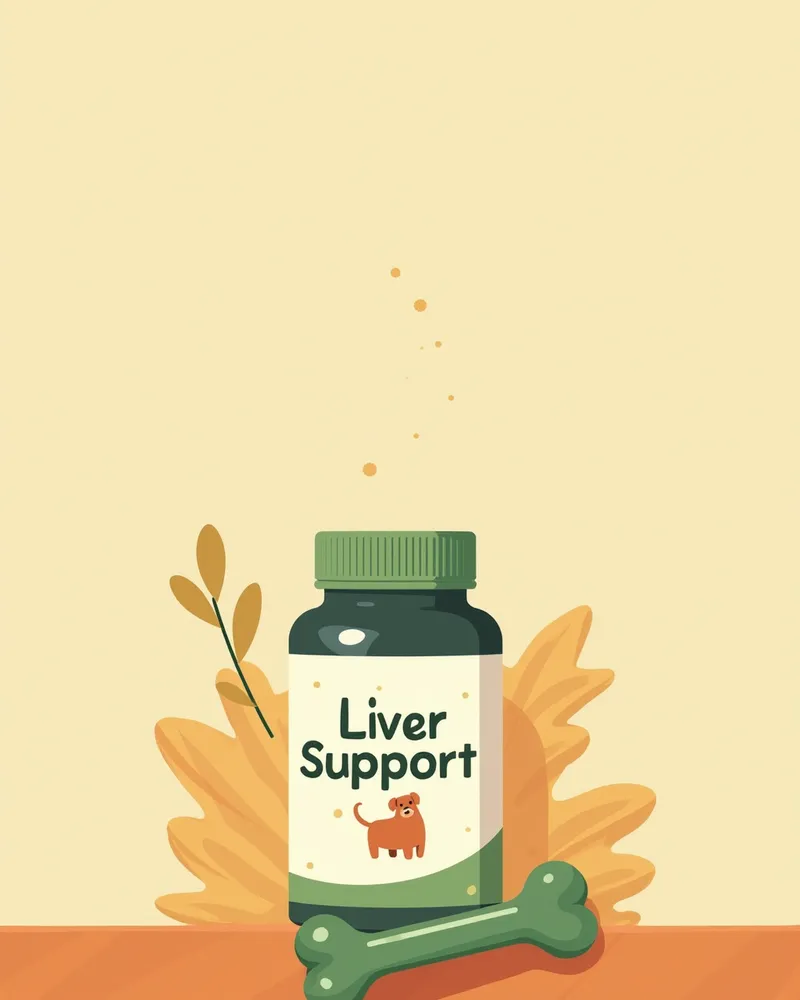
This product contains liver-supporting ingredients centered on silymarin (milk thistle extract). Silibinin, the active component of silymarin, helps manage toxic, metabolic, and inflammatory liver diseases through its antioxidant effects. However, clinical research on its efficacy in dogs remains limited, and because silibinin has low bioavailability, formulations combined with phosphatidylcholine are better absorbed. We recommend consulting your veterinarian before use.
Silymarin 200 mg: Helps protect liver cells through antioxidant activity.
Coenzyme Q10 50 mg: Added to support energy metabolism.
Vitamin E 100 IU: Provides additional antioxidant benefits.
Free from additives and preservatives: Reduces the risk of side effects.
Capsule form: Easy to mix into food.
Top 1: Managing Breed Predisposition to Hepatitis in Dogs – Product Image

BEST 2: Glucosamine & Silymarin Complex Supplement

This product is designed to support both liver health and joint care. Silymarin helps protect liver cells, while glucosamine is used for joint management. However, since there is limited evidence linking glucosamine to liver protection or establishing a direct connection between liver disease-prone breeds and joint issues, we recommend prioritizing liver-supporting ingredients like silymarin or SAMe if liver care is your primary concern. Please consult your veterinarian before deciding on long-term use.
Glucosamine 300mg: An ingredient used for joint protection.
Silymarin 150mg: May help protect liver cells.
MSM 100mg: Used to support joint health.
Easily digestible diet: Recommended alongside supplementation to aid liver care.
Powder form: Easily mixes into food.
Top 2 Dog Hepatitis-Prone Breeds: Management Products and Images

BEST 3: High-Protein, Low-Fat Liver Health Dog Food

This food is specially formulated with a highly digestible blend and adequate protein levels to support dogs requiring liver care. Even in the presence of liver disease, providing appropriate protein is crucial as long as hepatic encephalopathy is not present. Free from artificial additives and crafted primarily with naturally derived ingredients, this formula offers stability for long-term feeding. Recommended by veterinarians, it can be appropriately selected based on liver enzyme test results.
32% Adequate Protein: Helps maintain muscle mass and albumin levels.
Highly Digestible Composition: Helps reduce the burden on the gastrointestinal tract.
Contains Silymarin: May help protect liver cells.
No Additives or Preservatives: Ensures high safety standards.
Available for Small, Medium, and Large Breeds: Allows for selection tailored to your dog’s size.
Top 3 Dog Breeds Prone to Hepatitis: Management Products and Images

Comparison Table of Products BEST 1–3

ItemBEST 1 Silymarin-EnhancedBEST 2 Glucosamine & SilymarinBEST 3 High-Protein Digestive Food
Main IngredientsSilymarin (silibinin) 200mg, Coenzyme Q10, Vitamin EGlucosamine 300mg, Silymarin 150mg, MSMSilymarin, adequate protein, easily digestible composition
FormCapsulePowderFood
Fat ContentLowLow12%
Additional EffectsAntioxidant supportJoint protectionMuscle maintenance
Veterinarian-RecommendedTrueTrueTrue

Liver-protective ingredients such as silymarin and SAMe are used, but clinical evidence in dogs is still limited, so consult your veterinarian about product selection and combined use. Choose according to your dog's body condition and eating habits.

Precautions and Contraindications

In dogs predisposed to hepatitis due to their breed, excessive supplement intake can increase the burden on the liver. Do not use multiple products simultaneously without consulting your veterinarian. Additionally, because supplements may interact with medications your dog is already taking, be sure to have them checked at the clinic.

Usage Tips and Practical Management Methods

Caring for your dog’s liver health goes beyond simply giving supplements; daily management habits are key. Improving lifestyle habits alongside regular check-ups is the most effective approach.
Regular check-ups: It is important to have regular liver function tests, including liver enzymes (ALT and AST).
Dietary management: A highly digestible diet is recommended, along with adequate protein intake, provided there is no hepatic encephalopathy.
Ensuring water intake: Encourage frequent water consumption to prevent dehydration.
Medication and supplement management: Avoid excessive use of multiple supplements simultaneously, and consult your veterinarian regarding potential interactions with existing medications.
Moderate lifestyle: Adjust activity levels according to your dog’s condition to avoid overexertion.
Practical tips for managing breed predispositions to canine hepatitis

Reviewed by a veterinarian

Dr. Tony — Punnawat Phongkittirak

Dr. Tony — Punnawat Phongkittirak

Veterinarian

A veterinarian who majored in veterinary medicine at Khon Kaen University, Thailand, and completed the IVSA program at North Carolina State University in the United States. Drawing on clinical experience at animal hospitals, he works in the pet healthcare field and is dedicated to building a digital care environment that connects pet parents with veterinarians.

Frequently Asked Questions

Which dog breeds are more prone to developing hepatitis?
Idiopathic chronic hepatitis has been reported in Cocker Spaniels, English Springer Spaniels, and female Doberman Pinschers, while copper-associated liver disease has been reported in Bedlington Terriers, Doberman Pinschers, Labrador Retrievers, and West Highland White Terriers (WHWTs). This condition has a reported genetic predisposition in certain breeds.
When should I start giving nutritional supplements to a dog breed that is predisposed to hepatitis?
It’s safe to start regular check-ups six months after adoption and begin supplements at the time recommended by your veterinarian.
How should I transition my pet’s food while they’re taking nutritional supplements?
Switch to a highly digestible food that provides adequate protein, and choose supplements recommended by your veterinarian.
What types of exercise are effective for managing breed predispositions to hepatitis?
Moderate activities suited to your pet’s condition, such as walks and playtime, can be helpful. Please encourage regular movement without overexertion.
I’ve been giving my pet nutritional supplements, but their liver function has worsened. What should I do?
Stop giving the medication immediately and consult your veterinarian. Because liver function may be impaired, prompt veterinary care is necessary.

Share

Related Guides

References

[1] Webster CRL, Center SA, Cullen JM, et al. ACVIM consensus statement on the diagnosis and treatment of chronic hepatitis in dogs. J Vet Intern Med 33:1172-1200, 2019.

[2] Johnson SE. Parenchymal disorders. In Washabau RJ, Day MJ, editors: Canine and feline gastroenterology, St Louis, 2013, Elsevier Saunders, pp 870-904.

[3] Notes on Canine Internal Medicine, 4th Ed. Chapter 5.6: Hepatocellular diseases.

This information is based on veterinary literature and does not replace diagnosis or treatment. Please consult a veterinarian for specific health concerns.

Metapet Co., Ltd. | CEO: Park Sung-yong | Business Reg. No. 417-88-02562 | Seoul, South Korea | Customer Center

7 Dog Breeds Prone to Hepatitis & Vet-Recommended Care Tips | Meongsiljang